Journal
What's With the Circles? Cupping, Explained
You've seen the circles. Maybe on an Olympic swimmer's shoulders, maybe on a mate at the beach. Here's what cupping actually does, why the marks show up, and why we love pairing it with acupuncture.
so let's talk about the circles. You've probably seen them, on a swimmer's shoulders mid-Olympics, on someone at the beach who clearly knows something you don't. Round, dusky, a little dramatic. People see them and immediately think "ouch, what happened?"
Nothing bad happened. That's cupping, and it's one of the gentlest, most satisfying things we do in the clinic. Let's unpack it.
What cupping actually does
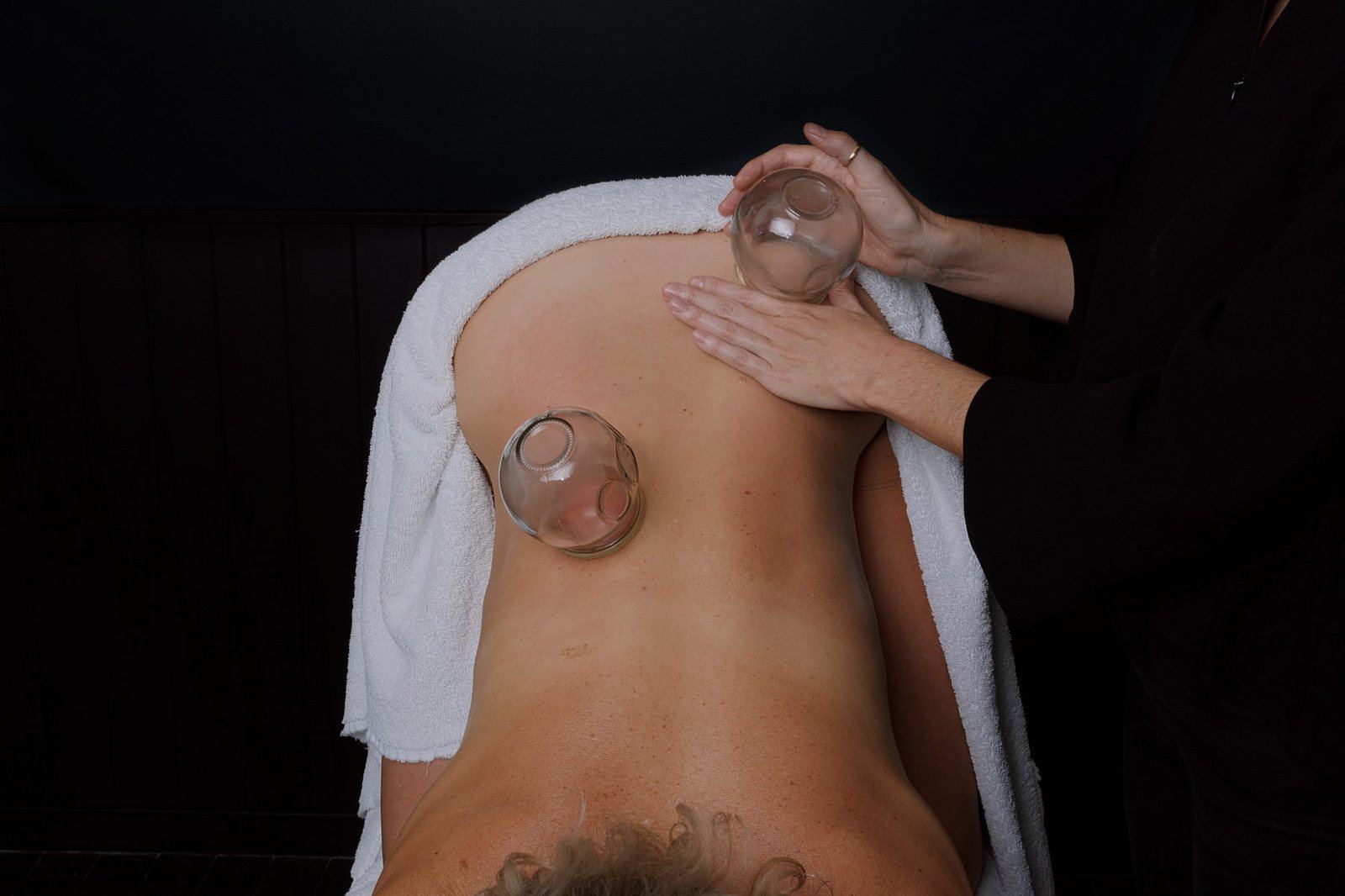
Cupping is the opposite of a deep-tissue massage. Instead of pressing down into the muscle, we create gentle suction that lifts the tissue up. We use glass or silicone cups, draw out a little air, and let that vacuum do the work, decompressing the layers underneath the skin.
Why does lifting matter? Because so much of the tightness we carry isn't just in the muscle belly, it lives in the fascia, the thin connective web that wraps around every muscle, like the pith on an orange segment. When fascia gets stuck, dehydrated or glued down to the layers around it, you feel restricted, achy, "knotted." Suction creates space. It encourages blood flow into areas that have gone a bit quiet and sluggish, and it gives stuck tissue a chance to glide again.
In Chinese medicine terms, we'd say cupping helps move stagnation, that heavy, stuck, congested feeling, and gets Qi and blood circulating where they'd been pooling. In plain-body English: it's a reset for tissue that's been holding on too tightly for too long.
Right, the marks. Let's clear this up.
The number one question we get: "are those bruises?" No. A bruise is trauma, something has impacted the tissue and broken capillaries through force. Cupping marks are different. The suction draws stagnant blood and metabolic waste up toward the surface, where your body can clear it out properly.
Here's the genuinely interesting part: the colour tells a story.
- Pale pink or barely-there, the area is moving well, good circulation, not much stagnation.
- Deeper red to purple, more stagnation, tightness or congestion in that spot. Often the areas that were aching the most.
- Fading over a few days, that's your body doing its housekeeping.
So the marks aren't damage. They're a snapshot of what was going on underneath, and they shift over a course of treatments as things move and clear.
What it's good for
Cupping is a favourite for the stuff modern bodies accumulate: tight shoulders and necks from desks and phones, stiff upper backs, lower-back tension, that band of tightness across the traps that never quite lets go. It's used to support muscular tension, restricted movement and general "stuck-ness," and a lot of people find it helpful when they feel congested or heavy through the chest in the cooler months too.
We're careful with our language here, cupping isn't a magic cure for anything. But as a tool for easing tension, encouraging circulation and helping the body move stagnation, it earns its place again and again.
What it actually feels like
During: a deep, drawing, slightly-heavy sensation. Most people describe it as oddly pleasant, like a tightness being gently pulled open rather than pushed on. Sometimes we'll leave the cups still for a few minutes. Sometimes we glide them with a little oil for a moving, massage-like effect. Nothing sharp, nothing forceful.
After: most people feel loose, warm and a touch lighter through the area. You might feel a little tender on the cupped spots for a day, similar to after a good stretch. Keep warm, drink some water, take it easy on intense training that day, and let your body do its thing.
Why we so often pair it with acupuncture
Pins & herbs & pins & herbs, and cups. Here's the logic: cupping works broadly across muscle and fascia, opening up whole regions and getting blood moving. Acupuncture works precisely, addressing specific points to calm the nervous system, settle pain signals and support the body more systemically. One is the wide brush, the other is the fine detail.
Together they're more than the sum of their parts: cupping releases the gross tension, acupuncture refines and settles it, and you walk out feeling genuinely unwound rather than just temporarily loosened.
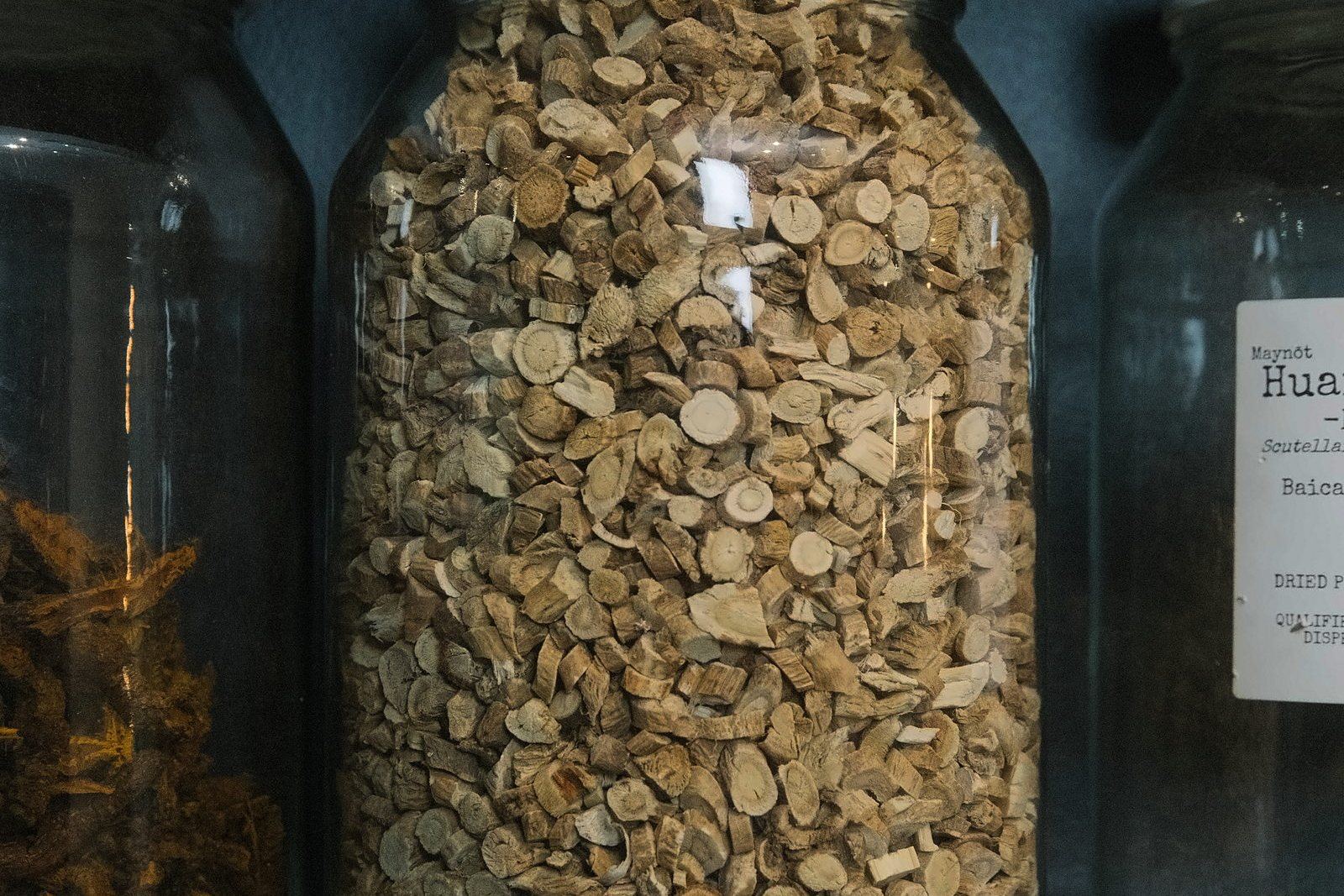
Because we practise Japanese-style gentle acupuncture, the whole experience stays soft. You barely feel the needles, the cupping is drawing rather than aggressive, and the room, brick, velvet chair, warm Edison light, herbs lined up like an old apothecary, does half the work before we've even started.
Curious to feel it for yourself? Re and Ali would love to look after you. Book online anytime through Cliniko, or call us on 0406 660 720. First appointments are $170 for 90 minutes, standard sessions $120 for 60 minutes, and HICAPS health-fund rebates are available on the spot. Find us upstairs at First Floor, 1/17 Griffith St, Coolangatta, inside Maverick. Come get those circles. Let's go!
Ready when you are.
First appointments run 90 minutes, so there is room to hear the whole picture before anything else happens.
More from the journal
Keep reading.
Scared of Needles? Why Japanese-Style Acupuncture Barely Feels Like Anything
if the idea of needles makes you tense up, you're not weird, you're normal. here's why Japanese-style acupuncture feels like almost nothing, and how we keep it gentle.
Liver Season Is Here: How to Move With Spring (TCM Style)
Spring is in the building, which means Liver season is here. Here's why Traditional Chinese Medicine reads the seasons, the signs your Qi might be stuck, and the simple medicine of greens, movement and letting it out.
A Moment for Moxa: What Moxibustion Is and Why We Love It
A moment for moxa, yo. Here's what that warm, herby, slightly-smoky ritual actually is, why we love it in the clinic, and whether you'll walk out smelling like a campfire (spoiler: not really).